Editorial note: This recipe is shared for flavor and general nutrition information. No single food or drink causes weight loss or replaces individualized advice from a qualified health professional.
These seven protein fruit smoothie recipes combine fruit, a protein source, and optional additions for flavor and texture. They can be convenient, but no smoothie is proven to cause weight loss, prevent cravings, stabilize blood sugar, or transform health on its own.
Protein, fiber, fat, and total calories all affect how filling a smoothie feels, and responses differ. Use portions that fit your needs rather than relying on a fixed protein target or “fat-burning” formula.
Fruit contributes carbohydrate, fiber, vitamins, and flavor. Fiber can influence digestion, but it does not guarantee that a smoothie prevents glucose changes or fat storage.
Smoothies can fit breakfast, snacks, or post-workout routines. Whether one is nutritionally complete depends on the full recipe and the person’s needs.
Use these recipes as flexible meal or snack ideas, not as guaranteed tools for weight loss or long-term health change.
Nutritional Foundations of Effective Smoothies
A balanced smoothie usually includes a liquid, fruit, and a protein source. Optional seeds, nut butter, yogurt, or oats change calories, texture, and nutrition.
Role of Protein in a Smoothie
Protein contributes to daily intake and may affect fullness. Individual needs vary with body size, age, activity, health, and the rest of the diet.
There is no universal 20–30 gram target for every smoothie. Choose an amount that fits your overall nutrition plan.
Importance of Fiber and Healthy Fats
Fruit, oats, chia, flax, or other ingredients can add fiber. Nut butter and seeds add fat and calories as well as texture; they do not “balance hormones.”
Combining ingredients thoughtfully can make a smoothie more substantial, but it does not make the drink metabolically active or automatically appropriate for weight loss.
How to Build a Balanced Protein Fruit Smoothie
A useful starting formula is liquid, fruit, protein, and optional flavor or texture additions. Adjust quantities to taste and nutritional needs.
Choosing the Right Protein Source
Options include:
- Whey protein isolate (fast absorption)
- Plant-based protein (pea, hemp, rice blends)
- Greek yogurt (natural protein + probiotics)
- Silken tofu (for dairy-free creaminess)
Protein sources differ in amino-acid profile, allergens, sweeteners, and serving size. None directly increases fat metabolism.
Fruits That Work Well in Smoothies
Low-glycemic fruits are ideal:
- Berries (blueberries, raspberries, strawberries)
- Green apples
- Kiwi
- Grapefruit
- Pineapple (in moderation)
Fruit choice affects taste, fiber, acidity, and sugar. It does not determine whether a smoothie burns fat.
Smart Liquid Bases
Liquid choices matter. Unsweetened almond milk, oat milk, coconut water, or plain water are better than fruit juice. They lower calorie content while maintaining texture.
Measure calorie-dense additions if that matters to your plan, and check packaged protein or milk labels for sugar, sweeteners, and allergens.
7 Protein Fruit Smoothie Recipes
These seven recipes offer different flavors and textures. Nutrition varies by brands, portion sizes, and substitutions.
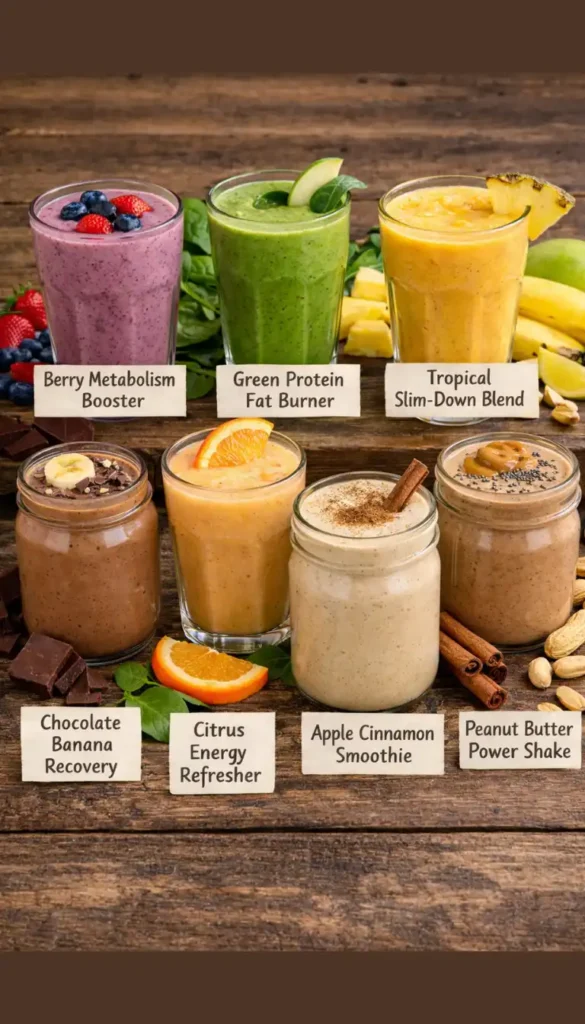
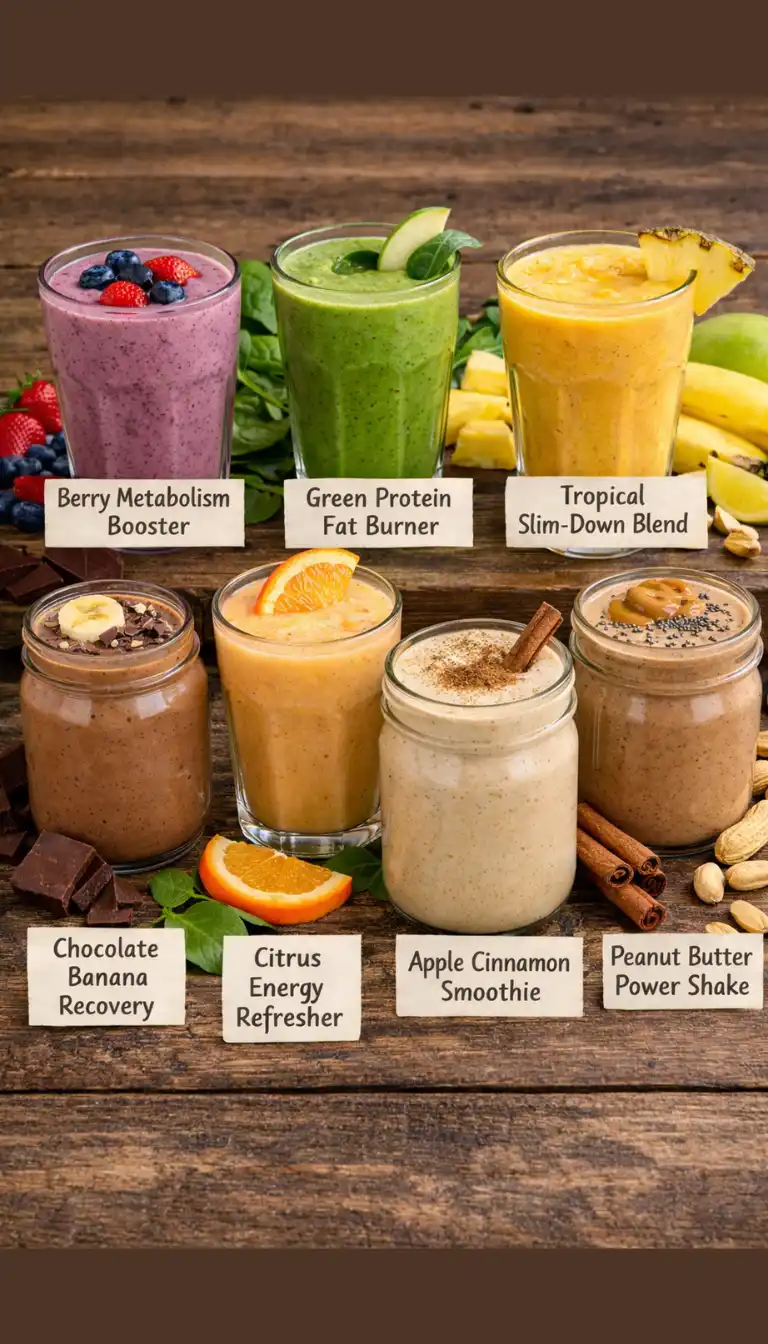
1. Mixed Berry Protein Smoothie
Ingredients:
- 1 scoop vanilla protein powder
- ½ cup blueberries
- ½ cup strawberries
- 1 tablespoon chia seeds
- 1 cup unsweetened almond milk
Berries add tart-sweet flavor and fiber. The finished nutrition depends on the protein source and serving size; it is not a blood-sugar or inflammation treatment.
2. Green Fruit Protein Smoothie
Ingredients:
- 1 scoop plant protein
- 1 cup spinach
- ½ green apple
- ½ frozen banana
- 1 tablespoon flaxseed
- 1 cup coconut water
Leafy greens change color and add micronutrients. The blend does not detox the body or increase fat metabolism.
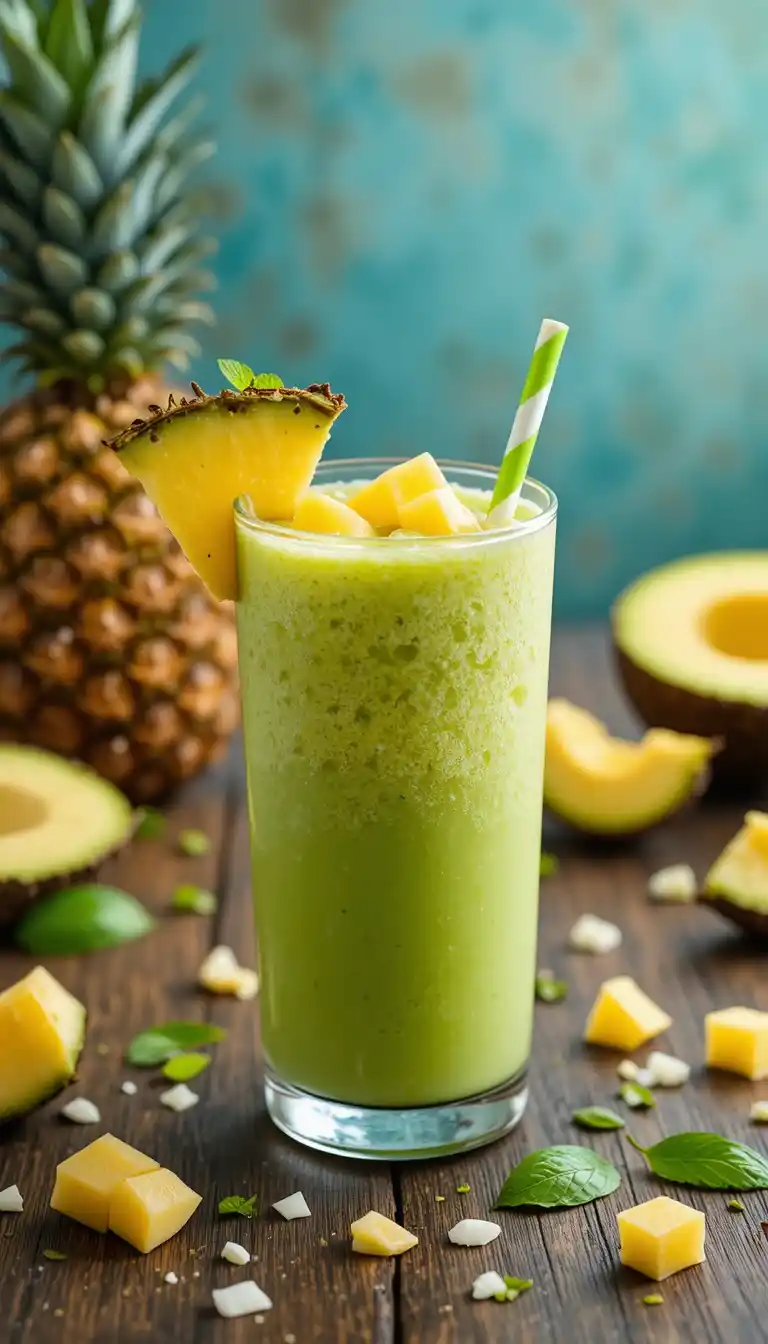
3. Tropical Protein Smoothie
Ingredients:
- 1 scoop whey protein
- ½ cup pineapple
- ½ cup mango
- 1 tablespoon Greek yogurt
- 1 cup almond milk
Tropical fruits offer vitamin C and digestive enzymes. Moderation keeps calories controlled.
4. Chocolate Banana Recovery Shake
Ingredients:
- 1 scoop chocolate protein
- ½ banana
- 1 tablespoon peanut butter
- 1 cup oat milk
- Ice cubes
This sweet smoothie can work after exercise if its ingredients fit your recovery needs. It does not automatically satisfy cravings or remain low in sugar.
5. Citrus Energy Refresher
Ingredients:
- 1 scoop vanilla protein
- ½ grapefruit
- 1 orange segment
- 1 tablespoon hemp seeds
- 1 cup water
Vitamin C boosts immunity and supports collagen production.
6. Apple Cinnamon Protein Protein Smoothie
Ingredients:
- 1 scoop protein powder
- ½ apple
- ¼ teaspoon cinnamon
- 1 tablespoon almond butter
- 1 cup almond milk
Cinnamon adds warmth and flavor. This recipe is not a treatment for insulin sensitivity or blood sugar.
7. Peanut Butter Banana Protein Smoothie
Ingredients:
- 1 scoop chocolate protein
- ½ frozen banana
- 1 tablespoon peanut butter
- 1 tablespoon chia seeds
- 1 cup unsweetened almond milk
Peanut butter and protein add energy and may feel filling, but fullness varies.
Common Mistakes to Avoid
A smoothie can become much higher in calories or sugar than expected when portions and add-ins are not considered.
Common errors include:
- Adding fruit juice instead of whole fruit
- Using sweetened yogurt
- Oversized portions
- Ignoring total daily calorie intake
Additionally, loading smoothies with honey or syrups turns them into desserts. Instead, sweetness should come from whole fruits.
Portion awareness is key. Even healthy ingredients contain calories. Measuring servings ensures consistency.
Meal Replacement vs Snack Smoothies
A protein fruit smoothie can be a snack or part of a meal. To serve as a meal replacement, it must meet the individual’s energy and nutrient needs rather than simply contain a few categories of ingredients.
- 25–30g protein
- Fiber source
- Healthy fats
As a snack, 15–20g protein may be sufficient.
Timing is preference-based. Morning smoothies do not control appetite all day, while a post-workout smoothie is useful only when it fits the person’s overall recovery plan.
Consistency, rather than perfection, drives results.
Optional Weekly Smoothie Rotation
Planning ahead increases adherence. Below is a simple weekly rotation:
| Day | Smoothie |
|---|---|
| Monday | Berry Metabolism Booster |
| Tuesday | Green Fruit Protein Smoothie |
| Wednesday | Chocolate Banana Recovery |
| Thursday | Apple Cinnamon Protein |
| Friday | Tropical Protein |
| Saturday | Citrus Energy |
| Sunday | Peanut Butter Banana Protein |
A weekly rotation can add variety. It does not ensure weight-loss results or complete nutrition.
For additional nutritional guidance, readers may consult resources like the Harvard T.H. Chan School of Public Health:
https://www.hsph.harvard.edu/nutritionsource/
Frequently Asked Questions
1. How often should someone drink protein fruit smoothie recipes for weight loss?
There is no evidence-based daily frequency for weight loss. Choose smoothies according to your diet, preferences, hunger, and health needs; they do not have to replace breakfast or a post-workout meal.
2. Can smoothies replace all meals?
No. Relying on smoothies for every meal can reduce variety and may miss important nutrients or textures. A qualified dietitian can help when a liquid meal plan is medically necessary.
3. Are plant-based proteins effective?
Pea, soy, rice, hemp, and blended plant proteins differ in protein quality and ingredients. Choose one that fits allergies, preferences, and total dietary needs.
4. Do smoothies cause sugar spikes?
They can. Fruit, juice, milk, sweeteners, and portion size all affect carbohydrate content and individual glucose response. People managing diabetes should follow their established plan.
5. What is the ideal calorie range?
There is no universal calorie range for weight loss. Energy needs and goals vary, so use the recipe nutrition as an estimate and seek individualized guidance when needed.
6. Can smoothies help reduce belly fat?
No food or drink can target belly fat. Smoothies do not create spot reduction or guarantee overall fat loss.
Conclusion
These protein fruit smoothies are practical recipe options for busy mornings, snacks, or post-workout meals. Their nutrition depends on the full ingredient list and serving size.
A mix of protein, fruit, and optional fiber or fat can create a satisfying texture and flavor, but it does not “support metabolism” in a special way.
If weight change is a goal, consider the whole eating pattern, activity, sleep, health, and professional support—not a single smoothie.
Start with flavors you enjoy, use portions that fit your needs, and treat the recipes as food rather than a transformation program.
Print
Protein Fruit Smoothie Recipes
- Prep Time: 5 minutes
- Total Time: 5 minutes
- Yield: 1 serving 1x
- Category: Beverage
- Method: Blending
- Cuisine: International
- Diet: Gluten Free
Description
These protein fruit smoothie recipes for weight loss are nutrient-dense, satisfying, and easy to prepare. Each smoothie blends high-quality protein with fiber-rich fruits and healthy fats to support metabolism, reduce cravings, and promote sustainable fat loss. Perfect as a quick breakfast, post-workout recovery drink, or healthy meal replacement, these smoothies are balanced, naturally sweet, and free from refined sugars.
Ingredients
Base Formula (For 1 Serving)
- 1 scoop protein powder (whey or plant-based)
- ½–1 cup fresh or frozen fruit (berries, banana, apple, pineapple, mango, citrus)
- 1 tablespoon healthy fat (chia seeds, flaxseed, almond butter, peanut butter)
- 1 cup unsweetened almond milk (or coconut water, oat milk, or water)
- Optional: ½ cup Greek yogurt (for extra protein and creaminess)
- Ice cubes (as needed)
Instructions
- Add the liquid base to the blender first.
- Add protein powder and yogurt (if using).
- Add fruits and healthy fats.
- Blend on high for 30–45 seconds until smooth and creamy.
- Adjust thickness by adding more liquid or ice if needed.
- Pour into a glass and serve immediately.
Notes
- Use frozen fruit for a thicker texture without adding ice.
- Keep fruit portions moderate to control natural sugars.
- Choose unsweetened milk alternatives to reduce calories.
- Add leafy greens like spinach for extra nutrients without affecting taste.
- For meal replacement, ensure at least 20–30g protein per serving.