The portuguese coconut cake recipe is a beloved dessert known for its rich coconut aroma, moist crumb, and comforting sweetness. This cake reflects the tropical influence found in many Portuguese desserts, particularly those from regions connected to coastal trade routes and island cultures. Because coconut became widely available through historic Portuguese exploration, it gradually found its way into traditional baking.
At first glance, the portuguese coconut cake recipe may appear simple. However, its beauty lies in its balanced texture and flavor. A soft sponge base, creamy coconut notes, and a delicate topping create a dessert that feels both rustic and elegant. Many families prepare this cake for holidays, gatherings, and afternoon tea.
Furthermore, this cake’s preparation is straightforward, which makes it ideal for beginner bakers. The ingredients are common pantry staples, yet the result feels indulgent. For this reason, the portuguese coconut cake remains popular in modern kitchens as well.
Most importantly, the cake captures the essence of Portuguese comfort baking—warm, homemade, and filled with nostalgic flavors that bring people together around the table.
History of Coconut Desserts in Portuguese Cuisine
Portugal’s culinary history is closely tied to exploration and maritime trade. During the Age of Discovery, Portuguese sailors traveled across Africa, Asia, and South America. Along these journeys, they encountered new ingredients, including coconuts. As trade routes expanded, coconut gradually became part of Portuguese desserts.
Consequently, coconut-based sweets began appearing in regional recipes. Islands such as Madeira and the Azores particularly embraced coconut flavors due to their coastal influence. Over time, the portuguese coconut cake recipe evolved as bakers experimented with shredded coconut, coconut milk, and coconut syrup.
Interestingly, Portuguese convents also played an important role in shaping dessert culture. Monasteries often created rich sweets using eggs and sugar, which were abundant at the time. When coconut was introduced, it blended beautifully with these ingredients. As a result, cakes and pastries featuring coconut gained popularity.
Today, the portuguese coconut cake recipe reflects both tradition and adaptation. While modern bakers may simplify certain steps, the essence of the recipe remains rooted in Portuguese culinary heritage. It’s a dessert that symbolizes cultural exchange, creativity, and the country’s long-standing love for sweets.
What Makes a Portuguese Coconut Cake Recipe Unique
Several characteristics distinguish the portuguese coconut cake recipe from other coconut cakes around the world. While coconut cakes appear in many cuisines, the Portuguese version focuses on subtle sweetness, soft texture, and a balanced coconut flavor.
First, the cake typically uses simple ingredients rather than heavy frostings. Instead of thick buttercream layers, many recipes rely on a light coconut glaze or syrup. This approach allows the natural coconut flavor to shine without overwhelming the palate.
Second, the texture is especially important. A traditional portuguese coconut cake recipe produces a tender crumb that stays moist for several days. Bakers achieve this by combining eggs, milk, butter, and shredded coconut carefully during mixing.
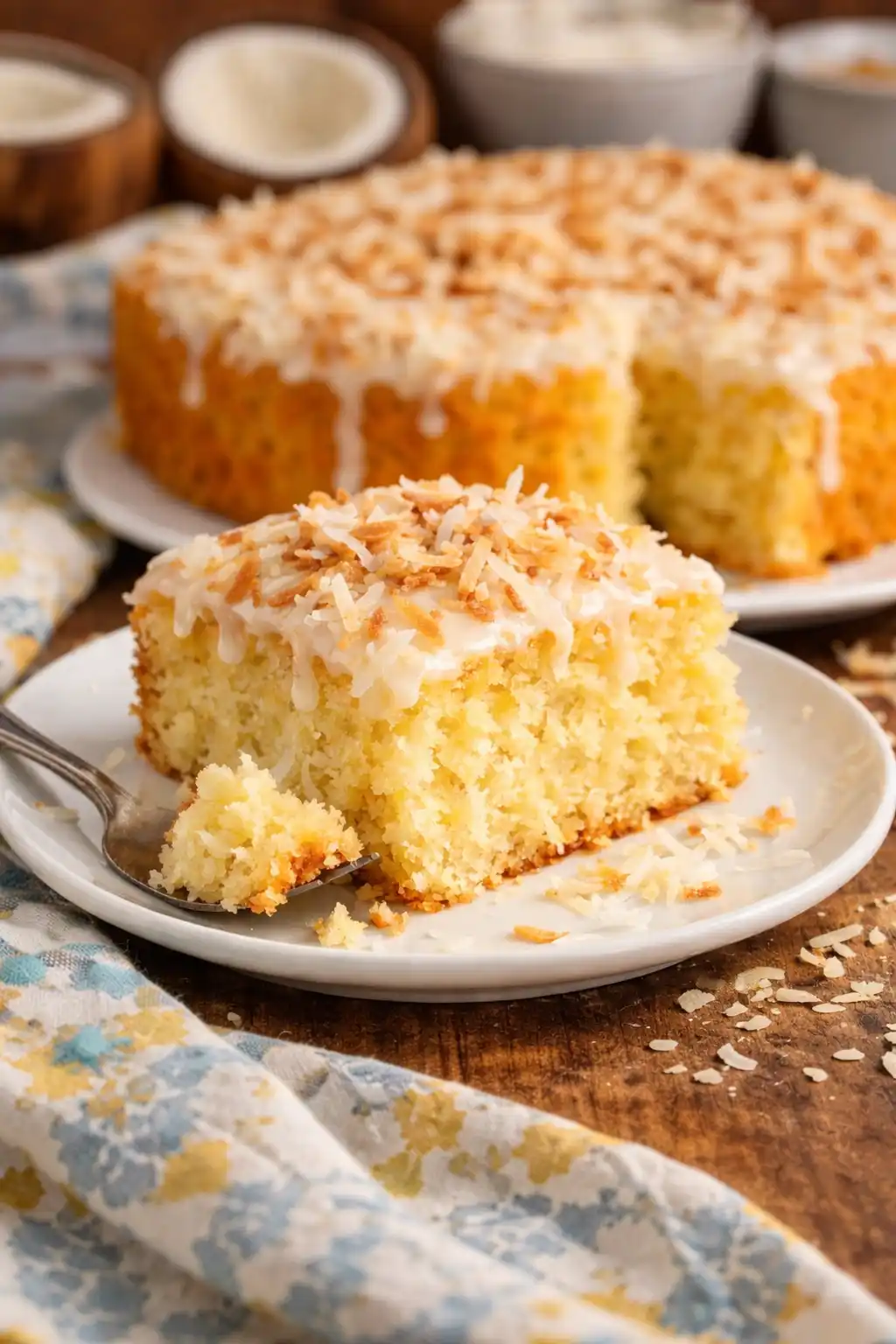
Another defining feature is the coconut topping. Many Portuguese bakers sprinkle toasted coconut over the cake, giving it a gentle crunch that contrasts beautifully with the soft sponge.
Finally, presentation remains simple yet elegant. Unlike elaborate celebration cakes, this dessert often appears as a single-layer cake served with coffee or tea. The charm lies in its homemade feel.
Overall, the portuguese coconut cake recipe stands out because it highlights authentic flavors, straightforward preparation, and a comforting bakery-style texture.
Essential Ingredients for Portuguese Coconut Cake
Creating an authentic portuguese coconut cake recipe requires a handful of carefully chosen ingredients. While the list is simple, each component contributes to the cake’s flavor and structure.
Dry Ingredients
The dry ingredients form the structural base of the cake.
Key dry ingredients include:
- All-purpose flour – provides the cake’s body and stability
- Granulated sugar – adds sweetness and supports moisture retention
- Baking powder – ensures the cake rises properly
- Salt – balances sweetness and enhances flavor
Flour and baking powder work together to create a light texture. Meanwhile, sugar helps maintain the moist crumb typical of the portuguese coconut cake recipe.
Wet Ingredients
Wet ingredients contribute richness and softness.
Important wet ingredients include:
- Eggs
- Whole milk
- Unsalted butter
- Vanilla extract
Eggs provide structure and tenderness. Butter adds richness, while milk ensures a soft, moist crumb.
Coconut Components
The most important element in the portuguese coconut cake recipe is, of course, coconut.
Common coconut ingredients include:
- Shredded coconut
- Coconut milk
- Coconut cream
- Toasted coconut flakes
Some recipes combine multiple forms of coconut to intensify flavor. This technique creates the signature tropical taste that defines the cake.
Kitchen Tools Needed
Preparing the portuguese coconut cake recipe does not require complicated equipment. However, having the right tools ensures consistent results.
Essential tools include:
- Mixing bowls
- Electric mixer or whisk
- Measuring cups and spoons
- 9-inch cake pan
- Rubber spatula
- Cooling rack
A mixer helps incorporate air into the batter, which leads to a lighter cake. Meanwhile, a cooling rack prevents excess moisture from collecting under the cake after baking.
These simple tools make the portuguese coconut cake recipe accessible for home bakers of all skill levels.
Step-by-Step Portuguese Coconut Cake Recipe
Following a clear method is essential for baking success. The portuguese coconut cake recipe involves three main stages: preparing the batter, baking the cake, and adding the coconut topping.
Preparing the Batter
- Preheat the oven to 350°F (175°C).
- Grease and line a 9-inch cake pan.
- In a bowl, whisk flour, baking powder, and salt.
- In another bowl, beat butter and sugar until fluffy.
- Add eggs one at a time, mixing well after each addition.
- Stir in vanilla extract and coconut milk.
- Gradually fold in dry ingredients.
- Mix in shredded coconut.
This stage ensures the batter stays smooth and evenly combined.
Baking the Cake
- Pour the batter into the prepared pan.
- Smooth the surface using a spatula.
- Bake for 30–35 minutes until golden brown.
- Insert a toothpick in the center to check doneness.
Once baked, allow the cake to cool before removing it from the pan.
Coconut Topping or Glaze
To finish the portuguese coconut cake, prepare a light topping.
Simple coconut glaze:
- 1 cup powdered sugar
- 2 tbsp coconut milk
- ½ cup toasted coconut
Drizzle the glaze over the cake and sprinkle coconut flakes for texture.

Expert Baking Tips for Perfect Texture
Baking a flawless portuguese coconut cake recipe often comes down to technique. Even small adjustments can improve the final result.
Helpful baking tips include:
- Use room temperature ingredients for smoother batter.
- Do not overmix the batter, as this can make the cake dense.
- Measure flour correctly using the spoon-and-level method.
- Toast coconut lightly to enhance its flavor.
- Allow the cake to cool fully before glazing.
Additionally, some bakers brush a light coconut syrup over the cake after baking. This step increases moisture and intensifies coconut flavor.
Consistency is key when baking. Following these tips ensures the portuguese coconut cake turns out soft, fragrant, and perfectly balanced every time.
Delicious Variations of Portuguese Coconut Cake
While the classic portuguese coconut cake is delicious on its own, bakers often experiment with creative variations.
Popular variations include:
1. Pineapple Coconut Cake
Adding crushed pineapple introduces tropical sweetness and extra moisture.
2. Lemon Coconut Cake
Lemon zest brightens the flavor and balances the cake’s richness.
3. Chocolate Coconut Cake
A cocoa sponge paired with coconut topping creates a decadent twist.
4. Coconut Cream Layer Cake
Two layers filled with coconut custard create a more festive dessert.
These variations keep the portuguese coconut cake exciting while preserving its traditional coconut character.
For additional inspiration on Portuguese sweets, readers can explore this guide:
https://www.portugueserecipes.ca
Serving Suggestions
Presentation can elevate the portuguese coconut cake from a simple dessert to memorable treat.
Serving ideas include:
- Dusting the cake with powdered sugar
- Pairing it with fresh berries
- Serving slices with whipped cream
- Adding toasted coconut garnish
Traditionally, the cake pairs beautifully with coffee or espresso, making it perfect for afternoon gatherings.
Because of its moist texture, the portuguese coconut cake also works well as a brunch dessert or a tea-time snack.
Storage and Shelf Life
Proper storage keeps the portuguese coconut cake fresh and flavorful.
Storage tips:
- Store at room temperature for 2 days in an airtight container.
- Refrigerate for up to 5 days if the cake contains glaze.
- Freeze slices for up to 2 months.
When freezing, wrap the cake tightly in plastic wrap and foil. Thaw it at room temperature before serving.
Nutritional Overview
Although the portuguese coconut cake is a dessert, it still provides certain nutrients.
Approximate values per slice:
| Nutrient | Amount |
|---|---|
| Calories | 290 |
| Carbohydrates | 34 g |
| Fat | 15 g |
| Protein | 4 g |
| Sugar | 20 g |
Coconut contains healthy fats and fiber, which add richness and texture to the cake.
Common Mistakes to Avoid
Even experienced bakers can encounter issues with the portuguese coconut cake.
Common mistakes include:
- Overbaking the cake
- Using cold ingredients
- Adding too much coconut
- Skipping the cooling process
- Incorrect oven temperature
Avoiding these errors ensures the cake remains soft, moist, and flavorful.
Frequently Asked Questions
1. What are the 7 powerful secrets to mastering a Portuguese coconut cake?
Mastering a portuguese coconut cake involves seven key techniques that transform a simple cake into an irresistible dessert. First, use room-temperature eggs and butter to create a smooth batter. Second, measure flour carefully to avoid a dense texture. Third, mix the batter gently so air stays trapped inside. Fourth, use quality coconut for a stronger flavor. Fifth, toast coconut flakes lightly. Sixth, allow the cake to cool before glazing. Finally, brush a light coconut syrup over the cake for extra moisture and aroma.
2. What are 5 amazing ingredients that make the portuguese coconut cake authentic?
An authentic portuguese coconut cake relies on five important ingredients that deliver traditional flavor. These include shredded coconut, coconut milk, fresh eggs, butter, and granulated sugar. Together, they produce the cake’s signature sweetness and moist texture. High-quality coconut is especially important because it provides aroma and flavor depth. Many bakers also add vanilla extract to enhance sweetness. When these ingredients are balanced correctly, the cake develops its classic Portuguese taste.
3. What are 6 brilliant tips for keeping portuguese coconut cake moist?
Keeping a portuguese coconut cake moist is easier with a few expert tricks. First, avoid overbaking by checking the cake early. Second, use coconut milk rather than regular milk for richer flavor. Third, add shredded coconut to lock in moisture. Fourth, brush coconut syrup over the warm cake. Fifth, store the cake in an airtight container to prevent dryness. Sixth, refrigerate the cake only if necessary. These small adjustments ensure every slice remains soft and flavorful.
4. Why do 4 simple steps make Portuguese coconut cake beginner-friendly?
Many bakers appreciate the portuguese coconut cake recipe because it follows four straightforward steps. First, mix the dry ingredients. Second, beat the wet ingredients until smooth. Third, combine both mixtures to create the batter. Fourth, bake until golden. This simple process requires no complicated techniques or specialized equipment. As a result, even beginner bakers can prepare a delicious homemade cake while learning fundamental baking skills.
5. What are the 8 incredible serving ideas for portuguese coconut cake?
There are eight wonderful ways to serve a portuguese coconut cake that make it even more enjoyable. For example, it pairs beautifully with fresh berries, whipped cream, or vanilla ice cream. Some people add toasted coconut flakes for extra crunch. Others drizzle coconut glaze or caramel sauce on top. It also tastes fantastic with espresso or tea. For festive occasions, bakers sometimes layer the cake with coconut cream filling to create a richer dessert.
6. What are 7 common mistakes when baking portuguese coconut cake recipe?
Several mistakes can affect the final result of a portuguese coconut cake recipe. One common issue is overmixing the batter, which can make the cake dense. Another is adding too much coconut, which may weigh down the sponge. Using cold ingredients can also prevent proper mixing. Incorrect oven temperature often leads to uneven baking. Additionally, removing the cake too soon from the pan may cause it to break. Avoiding these mistakes helps ensure perfect results.
Conclusion
The Portuguese coconut cake recipe remains a timeless dessert that blends simplicity with tropical flavor. Its soft sponge, delicate sweetness, and fragrant coconut topping create a cake that feels comforting and elegant at the same time.
Because the recipe uses basic ingredients and straightforward techniques, it’s accessible to bakers of all experience levels. At the same time, small details—like toasted coconut or a light glaze—allow for creativity and personalization.
Whether served at a family gathering, afternoon tea, or holiday celebration, the portuguese coconut cake continues to delight dessert lovers around the world. Its warm homemade flavor ensures that each slice feels like a little piece of Portuguese tradition.
Print
Portuguese Coconut Cake Recipe
- Prep Time: 15 minutes
- Cook Time: 35 minutes
- Total Time: 50 minutes
- Yield: 8 servings 1x
- Category: Dessert
- Method: Baking
- Cuisine: Portuguese
- Diet: Vegetarian
Description
This Portuguese Coconut Cake is a soft, moist, and flavorful dessert made with shredded coconut, creamy coconut milk, and simple pantry ingredients. The cake features a light sponge texture and a rich coconut aroma, making it ideal for family gatherings, afternoon tea, or special celebrations. Topped with a light coconut glaze and toasted coconut flakes, this traditional cake delivers a delicious tropical flavor in every bite. Easy to prepare and beginner-friendly, it’s a wonderful homemade dessert that combines simplicity with authentic Portuguese-inspired sweetness.
Ingredients
Dry Ingredients
- 2 cups all-purpose flour
- 1 cup granulated sugar
- 2 tsp baking powder
- ¼ tsp salt
Wet Ingredients
- 3 large eggs
- ½ cup unsalted butter (melted)
- 1 cup coconut milk
- 1 tsp vanilla extract
Coconut Flavor
- 1 cup shredded coconut
- ½ cup toasted coconut flakes (for topping)
Optional Coconut Glaze
- 1 cup powdered sugar
- 2–3 tbsp coconut milk
Instructions
- Preheat Oven: Preheat the oven to 350°F (175°C) and grease a 9-inch cake pan.
- Mix Dry Ingredients: In a bowl, whisk together flour, baking powder, and salt.
- Prepare Wet Mixture: In another bowl, beat eggs and sugar until light and fluffy. Add melted butter, coconut milk, and vanilla extract.
- Combine Batter: Gradually mix the dry ingredients into the wet mixture. Fold in shredded coconut until evenly combined.
- Bake the Cake: Pour the batter into the prepared pan and bake for 30–35 minutes, or until a toothpick inserted in the center comes out clean.
- Cool the Cake: Allow the cake to cool in the pan for 10 minutes, then transfer to a wire rack.
- Add Topping: Drizzle the cake with coconut glaze and sprinkle with toasted coconut flakes before serving.
Notes
- Use room-temperature eggs and milk for a smoother batter.
- Toast coconut flakes lightly for extra flavor and crunch.
- Avoid overmixing the batter to keep the cake soft and fluffy.
- The cake tastes even better the next day as the coconut flavor develops.